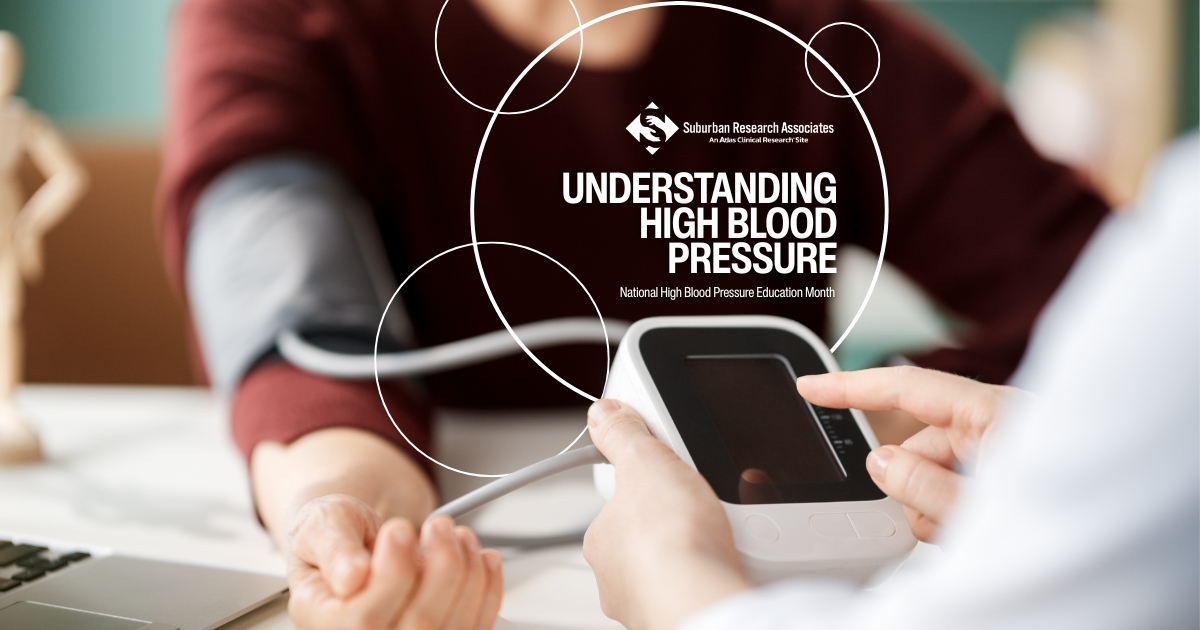
Every May, National High Blood Pressure Education Month helps raise awareness about the dangers of high blood pressure, also known as hypertension, and encourages people to take steps toward prevention, detection, and management.
High blood pressure affects millions of adults across the United States and is one of the leading risk factors for heart disease and stroke. Because symptoms are not always noticeable, many people may not know they are living with elevated blood pressure until complications occur.
That is why education, regular screenings, and ongoing medical research remain so important.
Understanding High Blood Pressure
Blood pressure measures the force of blood pushing against the walls of the arteries. When blood pressure stays consistently high over time, it can place extra strain on the heart and blood vessels. According to the Centers for Disease Control and Prevention (CDC), nearly half of U.S. adults have high blood pressure, but only about 1 in 4 adults with hypertension has it under control. Risk factors may include:- Family history
- Excess weight or obesity
- Diabetes
- Smoking
- Physical inactivity
- High sodium (salt) diets
- Stress
- Aging
Why Clinical Research Is Important
Clinical research studies help researchers better understand hypertension and evaluate investigational approaches that may potentially improve future treatment options. Many medications and treatment strategies available today were made possible because volunteers participated in clinical trials. Research participation may help:- Advance future medical care
- Improve understanding of cardiovascular disease
- Evaluate investigational medications
- Support better prevention and management strategies
Currently Enrolling Hypertension Clinical Research Studies
Suburban Research Associates is currently enrolling adults with hypertension for a clinical research study. This study is evaluating whether an investigational use of iloperidone, a medication already approved for certain health conditions, may potentially help lower blood pressure. Clinical research volunteers play an important role in helping researchers advance future treatment options for hypertension and related conditions.Tips for Supporting Heart Health
While every individual’s healthcare needs are different, healthy habits may help support cardiovascular wellness:- Monitor your blood pressure regularly
- Stay physically active
- Reduce sodium (salt) intake
- Avoid smoking
- Maintain regular healthcare visits
- Discuss your family history with your doctor
- Manage stress levels
Frequently Asked Questions About Clinical Research
1. What happens when I sign up for a clinical research study? After expressing interest, a member of our study team will contact you to discuss the study, review basic eligibility questions, and explain the next steps. 2. Will I receive medical care during the study? Participants are monitored by experienced research professionals throughout the study. Study-related care is provided at no cost for qualified participants. 3. Do I need health insurance to participate? Health insurance is not required to participate in many clinical research studies. The study team can confirm requirements for each study. 4. Can I leave a clinical trial if I change my mind? Yes. Participation in clinical research is voluntary, and participants may choose to leave a study at any time. 5. How are participants’ rights and safety protected? Clinical trials follow detailed study protocols and are reviewed by oversight groups before enrollment begins. Participants are monitored by the study team, and participation is always voluntary. 6. Why do people participate in clinical research? People participate for many reasons, including helping advance medical research, learning more about their condition, and supporting future treatment development.Resources
- CDC – High Blood Pressure Facts – https://www.cdc.gov/high-blood-pressure/about/index.html
- American Heart Association – High Blood Pressure Information – https://www.heart.org/en/health-topics/high-blood-pressure
- National Heart, Lung, and Blood Institute – https://www.nhlbi.nih.gov/health/high-blood-pressure